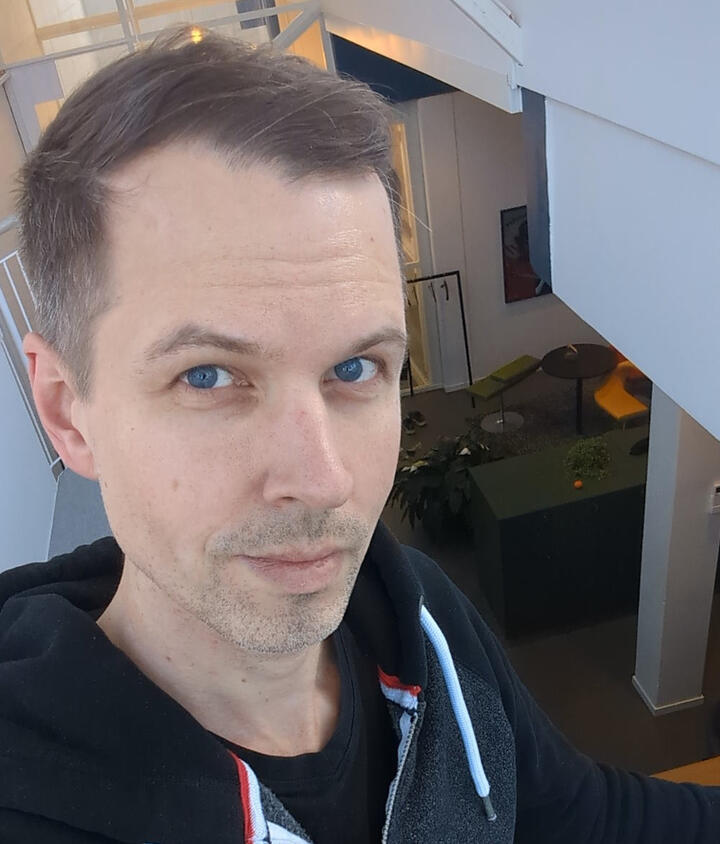
Well met, friend.
Hi, I'm Stefan. I'm an old-school RPG nerd who is finally fulfilling his dreams of game development after leaving the world of IT and project management behind. Passionate about emergent narratives, clever game mechanics and plot holes.
Currently looking for a game design internship!

Age of Ashes (Game Project)
Engine & tools: Unreal, Miro, Jira
My role: System designer (Blueprints) / Product owner
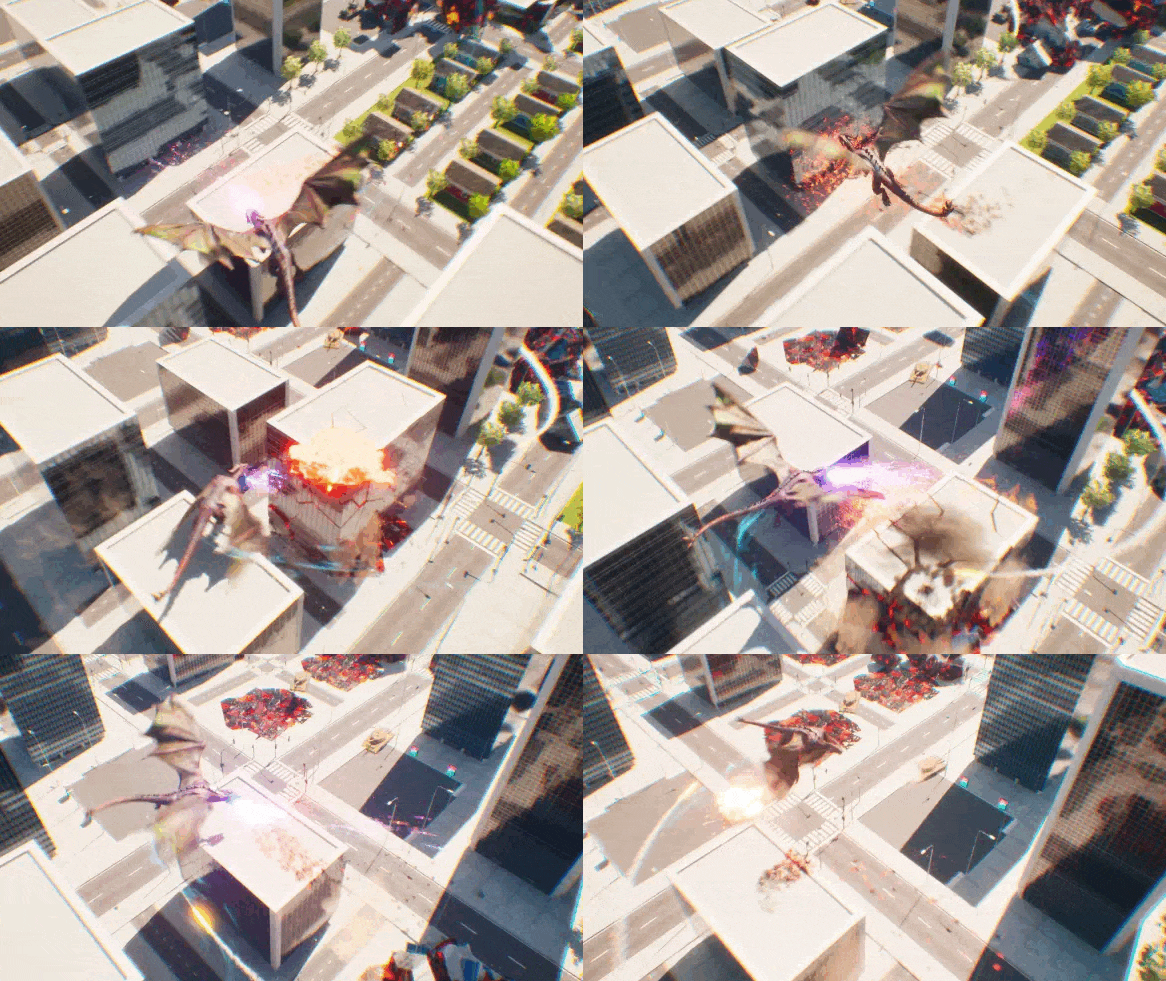
For our fourth game project at Futuregames, I pitched the idea of making a game with a simple core loop with a focus on power fantasy and satisfying destruction mechanics. The result was Age of Ashes, a game about taking control of a dragon and razing cities, inspired by classics like Desert Strike.

Luna: Shepherd of Souls (Game Project)
Engine & tools: Unreal, Miro, Jira, Excel
My role: Narrative designer
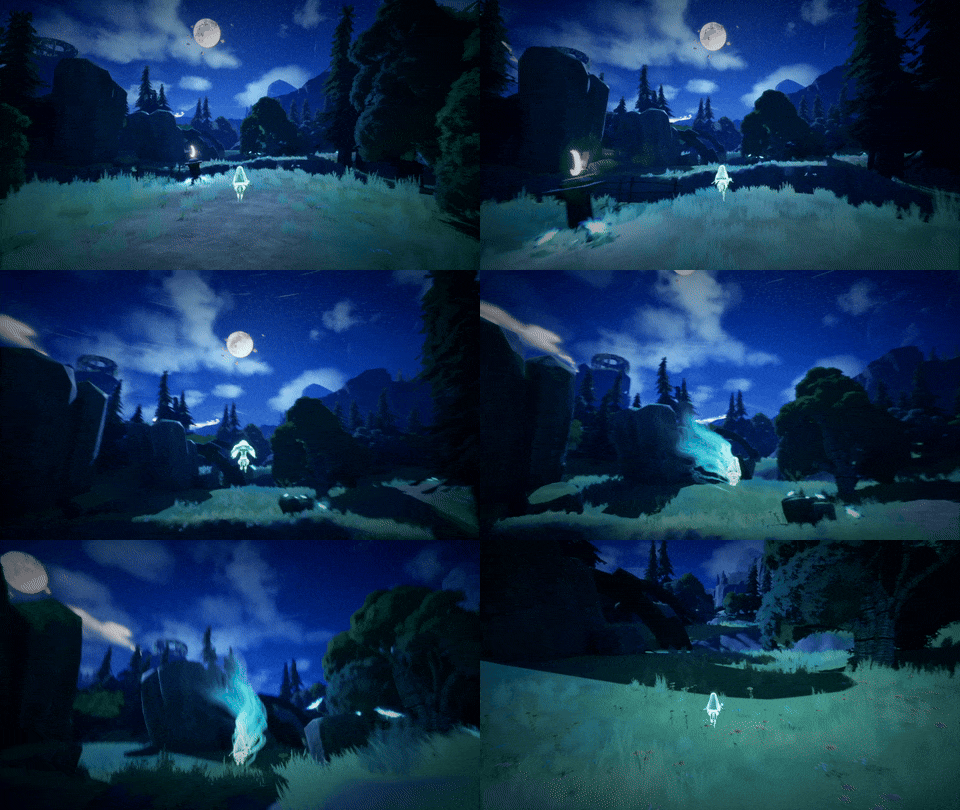
Our first Unreal game project at Futuregames became Luna: Shepherd of Souls, a game about traveling through a beautiful post-apocalyptic world, learning about the fates of the people who once lived there, and using your power to quite literally move the moon to stay in its light.
Underline: Deep Sea Solutions (Game Project)
Engine & tools: Unity
My role: Project Manager / Producer
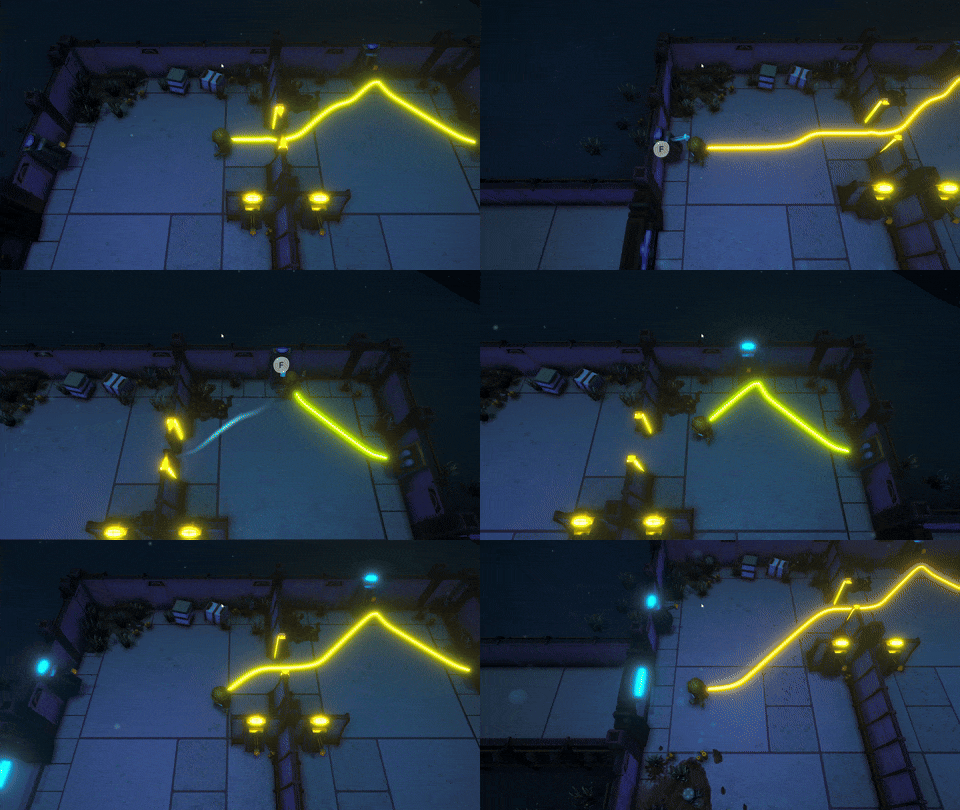
Underline: Deep Sea Solutions is a puzzle game where you need to think backwards and plan out your route in reverse, before using your air hose retraction device to speed yourself around the level! I had a different role in this game, being the project manager / producer rather than a designer.
Shattered Veil (Game Project)
Engine & tools: Unity
My role: Narrative designer
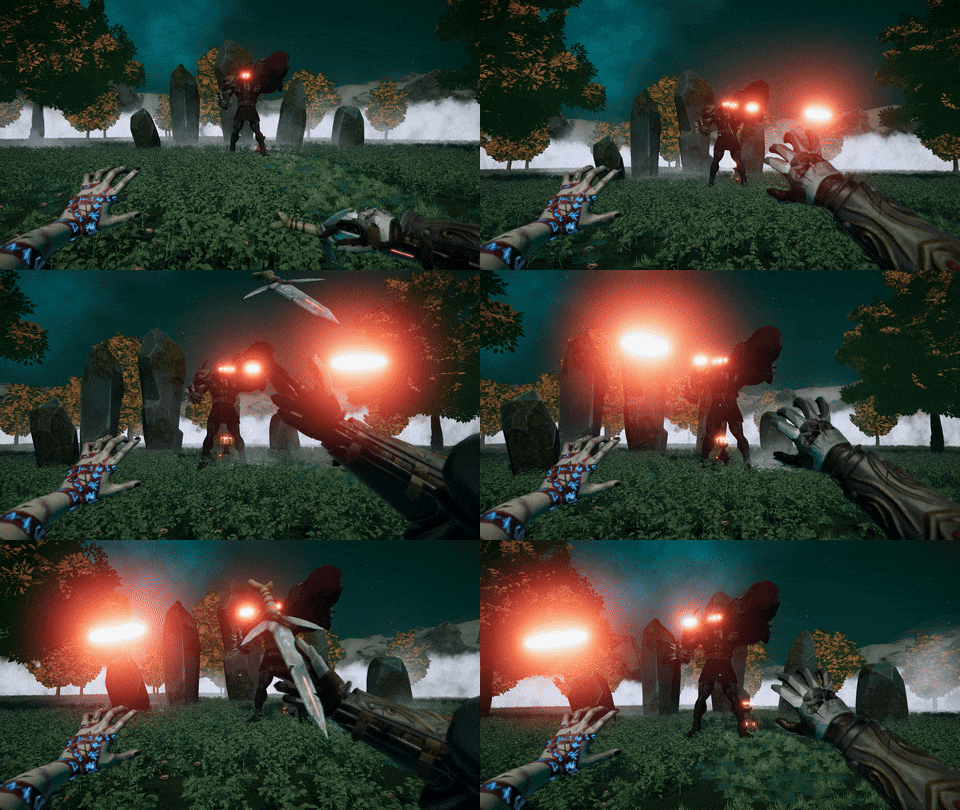
The pitch for Shattered Veil was to create a narratively driven exploration experience inspired by Celtic mythology, with some combat elements, where you try to escape your sidhe pursuers as you aim to seal the rift between worlds. At some point during production, it became an action FPS instead!
Skywarden
Skywarden (Game)
Engine & tools: Unity
Team size: 1
Scope: 4 weeks
My role: Everything except art!
Link: Itch.io
The first Unity game I ever created on my own was called Skywarden, an homage to the arcade games of the 80s. It's honestly just an Asteroids clone, but with satisfying explosions and wrapped in a C64 aesthetic. I also learned a lot of C# when making it!



Game Hub Umeå (Game Cluster)
Game Hub Umeå (GHU) is the name of a game developer community started by Uminova Innovation and later given into the care of eXpression Umeå and Umeå Kommun Näringsliv, who hired me to foster and promote local game development in the Umeå region.I had two different roles in this position. As the community manager of GHU I organized events for the local game developer community (game jams, playtesting, afterwork, etc), ran the Discord server (which grew to 350+ members in my time there) and worked together with schools and the university to promote local game development.In my role as the local representative for Arctic Game, I focused on meeting with the city's studios, finding out what they needed from the municipality, and helped lay the foundation for what is now called We Make Realms. I also collaborated with other gaming clusters from across Sweden in bi-weekly peer reviews, and worked tightly with Umeå Kommun Näringsliv to plan for the future of the region's games industry.


Ultima Legacy (Private MMO server)
Ultima Legacy was the name of a private Ultima Online server that I ran for several years. The server was focused on roleplaying and staff-run storylines based on the singleplayer Ultima series, and had over 600 unique players over its runtime.In my time with Ultima Legacy, I was a worldbuilder, server administrator, storyteller and scripter (first in something called SphereScript, later in C#). I put out some feelers to possibly revive the server in the early 2010s, but the interest just wasn't there anymore. Still, this represents some of my earliest attempts at creating a game and running a community, and I'm quite proud of what we accomplished in that time.
An old example of the worldbuilding process.


Ultima V: Lazarus (Mod)
Ultima V: Lazarus was my very first venture into game development back in the early 2000s. It was a total conversion mod of Dungeon Siege made to recreate Ultima 5 by Origin Systems with updated mechanics and an expanded narrative, and many of the team members who worked on the project went on to work in various roles in the games industry. Lazarus received a lot of positive press and still has its own Wikipedia page.My own role in this project is probably best summarized as script supervisor/lorekeeper, to make sure that the overhaul respected the original game's narrative. Interesting fact: other team members on this project convinced me not to get into the industry at the time, which is why I pivoted into IT instead!The original U5: Lazarus website is still up, by the way.


Images courtesy of RPGDot, since it's actually pretty difficult to get the game working on modern computers.
This is the part that's tricky to write.
When I was much younger, I dreamt of making games. My friends in the industry told me to pick something more stable and with better working conditions. I listened to them. A lifetime later, after a career in IT, I've decided it's finally time to chase that dream. I signed up for the game designer education at Futuregames, and the rest is history.As a child of the 80s, I've experienced the evolution of the video game from the 8-bit systems (I was on team Commodore, with the C128 and the Amiga 500!) to the wild west genre explorations of the 90s into the modern games we play today.My love for narrative design comes from a lifetime of playing tabletop RPGs - Drakar & Demoner, Mutant, Star Wars, GURPS, D&D and Pathfinder - and I've long since realized that I have a lot of stories I can't wait to tell. Now I just need to find the right people to tell them with!
Tools
Unity
Unreal Engine
C#
Visual Scripting
Perforce
Github
Jira
Skills
Iterative Design Processes
Project Management
Design Documentation
Rapid Prototyping
Fluent in Swedish, English and Norwegian
Proficient in German and Danish
Charisma 18

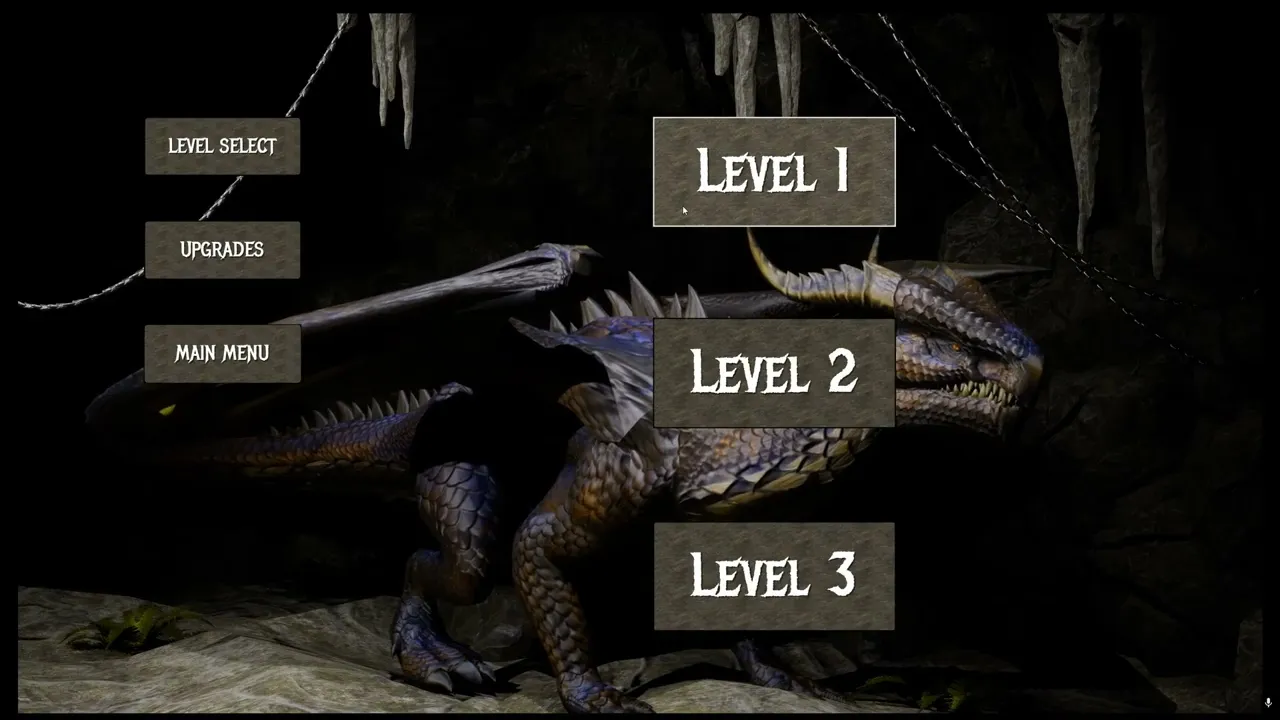
Age of Ashes (Game Project)
Engine & tools: Unreal, Miro, Jira
Team size: 6 people
Scope: 4 weeks
My role: System designer (Blueprints) / Product owner
Link: Itch.io
For our fourth game project at Futuregames, I pitched the idea of making a game with a simple core loop with a focus on power fantasy and satisfying destruction mechanics. The result was Age of Ashes, a game about taking control of a dragon and razing cities, inspired by classics like Desert Strike.For this project, I stepped out of my role as narrative designer to focus on systems, with the core loop and enemy design as my major responsibilities. As our team was small and our time limited, I ended up doing many other things as well - all UI elements, menus, enemy VFX, animation blueprints, asset preparation, and the gameplay intro & outros. I really had to learn a lot in a short span of time!I also took on the role of product owner, to make sure the team didn't lose sight of our initial vision. And although the game does lack some variety, I'm proud that we managed to create something that looks and feels satisfying to play. Who wouldn't want to be a dragon?



Luna: Shepherd of Souls (Game Project)
Engine & tools: Unreal, Miro, Jira, Excel
Team Size: 20 + 2 external resources
Scope: 7 weeks
My role: Narrative designer
Link: Itch.io
Our first Unreal game project at Futuregames became Luna: Shepherd of Souls, a game about traveling through a beautiful post-apocalyptic world, learning about the fates of the people who once lived there, and using your power to quite literally move the moon to stay in its light.As this was a story-driven game, I happily took on the role of narrative designer. A significant amount of work went into pre-production, during which we established the world's lore and the player's role in it. I prepared a "lore bible" and presented it as a narrative brief to the team.We'd decided early on that we wanted full voice acting for the game, so I wrote the dialogue and the voice direction for our four characters and worked with our programmers to implement it into the game. Much of it was told through cutscenes, and I created the level sequences that drove those cutscenes, something I'd never tried before. One of my favorite things about this was working closely with the level designers to create "quests" for each of their sections.This was a hugely ambitious project for the time frame, and although we didn't achieve all the goals we set out to accomplish, what we built together in these few was definitely special in its own right.


Shattered Veil (Game Project)
Engine & tools: Unity
Team size: 19 + 2 external
Scope: 4 weeks
My role: Narrative designer
The pitch for Shattered Veil was to create a narratively driven exploration experience inspired by Celtic mythology, with some combat elements, where you try to escape your sidhe pursuers as you aim to seal the rift between worlds. At some point during production, it became an action FPS instead!My greatest takeaway from this game project was the importance of speaking the same language, literally and figuratively. We were a large team who worked with the assumption that we were in complete alignment when it came to the direction of the game, but it turned out we had very different ideas of what the game was supposed to be!I worked on the narrative, which included the setting, the narrative beats and the voiced dialogue. As a big fan of Celtic folklore, I was more than happy to create our own mythology in our own little setting for this game.


Underline: Deep Sea Solutions (Game Project)
Engine & tools: Unity
Team Size: 12 + 1 external
Scope: 4 weeks
My role: Project Manager / Producer
Underline: Deep Sea Solutions is a puzzle game where you need to think backwards and plan out your route in reverse, before using your air hose retraction device to speed yourself around the level! I had a different role in the production of this game, being the project manager / producer rather than a designer.This was the project where the game development process actually clicked into place for me. Being the project manager for this team - running the standups, managing our Jira board, creating our sprints, holding our reviews and retrospectives - I was able to get a solid feel for just how each discipline worked, and who needed what information and when. Perhaps most importantly, I learnt the importance of good meeting routines, and when not to have a meeting.We scoped this game well, and I'm still really proud of it. I only wish I'd been involved a little more in the creative process!


